Application
Charge batteries when prices are low and discharge when they peak, capturing day-ahead and intraday price spreads.
Solution
Charge batteries when prices are low and discharge when they peak, capturing day-ahead and intraday price spreads.
Charge batteries when prices are low and discharge when they peak, capturing day-ahead and intraday price spreads.
Product supply, inverter matching, European warehouse coordination and project-scoped support.
Commercial and industrial buyers, installers and distributors planning energy projects in Europe.
The challenge
Volatile day-ahead and intraday markets reward storage that can buy energy cheaply and sell or self-consume it when prices peak.
Midday solar and off-peak hours push wholesale prices low, while evening peaks are expensive — a spread storage can capture.
Exporting PV at low feed-in tariffs leaves money on the table versus time-shifting it to high-price hours.
A bankable trading case needs verified equipment limits, market access, degradation assumptions and operating costs.
How it works
Project-configured energy-management logic can follow approved tariff schedules or external price inputs when the selected platform and permissions support them.
A supported EMS, tariff input or aggregator interface can provide price signals; the data source and control path are confirmed per project.
The battery charges from cheap grid power or surplus PV during low-price windows.
Stored energy is discharged to the site, or exported where permitted, within the project-specific battery, inverter and grid limits.
The cycling schedule is set against manufacturer limits, warranty terms, state-of-charge reserve, degradation assumptions and the project revenue case.
Design references
Product specifications are indicative for the Hithium 261 kWh C&I storage class. Final equipment, operating functions and project outcomes depend on the selected architecture, model and firmware, available interfaces, site design, tariff and local grid requirements, and are confirmed in the project quote.
Sunket Supply scope
Reference equipment
The final architecture may use an integrated Hithium PCS or the confirmed-compatible Hithium DC cabinet and Growatt WIT hybrid-inverter route. Equipment is selected against the site design.
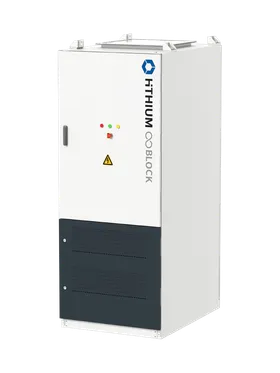 261 kWh liquid-cooled DC battery cabinetHithium 261 kWh DC CabinetView product range
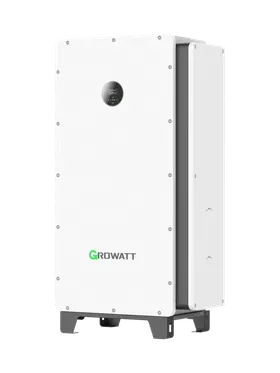 63–125 kW three-phase C&I hybrid inverter rangeGrowatt WIT 63–125K-XHUView product range
Exact model, firmware, interfaces, available quantity, dispatch warehouse and delivery timing are confirmed in the project quotation.
Hithium 261kWh all-in-one and DC cabinet architectures, scaled per project.
Scheduled cycling or external price-signal control where the selected platform, interface and permissions support it.
Architecture and interface review plus documentation coordination; market access, local electrical design, commissioning and operating responsibility remain subject to qualified-party and project confirmation.
FAQ
The system can be configured to follow supported price signals or tariff schedules where interface access and control permissions are confirmed. Market access and any export arrangement are handled through the energy supplier or aggregator; final operating logic is project-specific.
The two operating objectives may be combined where the selected platform, interfaces, market arrangement and available battery capacity support the required dispatch logic. Priorities and reserve limits are configured per site.
Payback depends on market access, price spread, tariff, cycling limits, degradation, fees and operating costs. A site-specific scenario can be prepared from customer-provided data, but it is not a guaranteed return.
Share your site profile and Sunket Supply returns a tailored, priced quote within 24 hours, with product availability and delivery scope confirmed.